



EV Charging Station Paving for Bay Area HOAs and Property Managers
California’s new 2026 building codes now require EV charging infrastructure in virtually all new multifamily residential and commercial parking lots. For Bay Area HOA boards, apartment complex managers, and commercial property owners, this means parking lot paving and EV charging readiness are now inseparable planning considerations.
As a leading asphalt paving contractor in San Jose serving the Bay Area for over 50 years, Calvac Paving has worked with hundreds of HOA communities, apartment complexes, and commercial properties on parking lot projects. This guide explains what the new California EV charging requirements mean for your parking lot, what paving work is typically involved, and how to plan and budget for EV ready parking lot upgrades.
What California’s 2026 EV Charging Mandate Means for Bay Area Properties
California’s 2025 California Green Building Standards Code — which took effect January 1, 2026 — significantly expanded EV charging requirements for new construction and major renovation projects across the state.
Here is what the new rules require:
Multifamily residential — apartments and condos
For any new multifamily development with parking spaces, at least one parking spot per unit must be EV Ready. An EV Ready space is defined as having at least a 240 volt, 20 ampere outlet or charger — either a standard outlet or a J1772 or J3400 connector.
Commercial parking lots
New commercial developments including retail centers, office parks, hotels, and mixed use properties must meet minimum EV ready parking percentages under the new CalGreen code.
What this means for existing Bay Area properties
While the new mandate applies to new construction and major renovation projects, existing Bay Area HOA communities, apartment complexes, and commercial properties are proactively installing EV charging infrastructure ahead of future requirements and to meet the growing demand from residents and tenants who drive electric vehicles.
Home EV charging emerged as one of the hottest real estate trends in 2025 and 2026, with homes featuring EV charging stations listed 91.6 percent more often in 2025 versus 2024 — a clear signal that EV charging has become a mainstream amenity that residents actively seek out when choosing where to live. calvacpaving
Why EV Charging Installation Involves Paving Work
Most property managers and HOA boards are surprised to learn how much paving work is typically involved in an EV charging station installation. Here is why:
Conduit trenching through asphalt
Installing EV chargers in an existing parking lot requires running electrical conduit from the building’s electrical panel to each charging location. This conduit is typically buried beneath the asphalt surface, which means sections of the parking lot must be cut, excavated, and repaved after the electrical work is complete.
Asphalt cutting and patching
Electricians cut through the asphalt to trench conduit runs across the parking lot. After conduit is installed and inspected, those trench cuts must be properly patched and compacted. Poor patching work leaves visible seams, creates trip hazards, and deteriorates quickly under vehicle traffic. Calvac Paving works directly with electrical contractors to ensure all trench cuts are patched to commercial specifications.
Parking stall reconfiguration
Adding EV charging stations often requires reconfiguring existing parking stall layouts to accommodate charger locations, cable management, and accessible path requirements. This means restriping sections of the parking lot or in some cases the entire lot.
ADA compliance for EV spaces
California requires EV charging spaces to meet ADA accessibility requirements. This includes proper stall dimensions, accessible path of travel connections, and surface requirements. Properties that add EV charging without addressing ADA compliance expose themselves to significant liability.
Surface preparation before charger installation
If a parking lot is in poor condition, sealcoating and crack sealing before EV charger installation is strongly recommended. Installing chargers in a deteriorating lot and then needing to repave shortly after means disrupting the chargers and their conduit runs — a costly and avoidable problem.
The Right Order of Operations for EV Charging Parking Lot Projects

Getting the sequence right saves significant time and money. Here is the order Calvac Paving recommends for Bay Area properties planning EV charging installations:
Step one — Pavement assessment first
Before any EV charging planning begins, have your parking lot professionally assessed. If the lot needs sealcoating, crack sealing, or resurfacing in the next three to five years, complete that work before EV charger installation. This avoids tearing up new conduit runs when pavement work is needed later.
Step two — Plan conduit routes with your electrician
Work with your licensed electrical contractor to map conduit routes across the parking lot before any trenching begins. Share those plans with Calvac Paving so we can coordinate the asphalt cutting, patching, and restoration scope.
Step three — Complete paving repairs and sealcoating
If your lot needs maintenance work, complete it before conduit trenching begins. A freshly sealed and striped lot provides the cleanest baseline for EV charger installation.
Step four — Electrical conduit trenching and installation
Your electrical contractor cuts the asphalt, installs conduit and pull boxes, and completes the electrical rough-in. Calvac Paving coordinates directly with your electrician on trench cut locations and dimensions.
Step five — Asphalt trench restoration
After conduit is installed and inspected, Calvac Paving restores all trench cuts with properly compacted hot mix asphalt patching matched to the existing surface. All patches are completed to commercial specifications to ensure long term durability and a clean appearance.
Step six — Restriping and ADA compliance
After all paving work is complete, Calvac Paving re-stripes the affected parking stalls including EV designated spaces, ADA accessible spaces, directional arrows, and any other required markings. All EV stall markings and ADA designations meet current California Building Code requirements.
EV Parking Lot Paving for HOA Communities

HOA communities throughout the Bay Area are actively planning EV charging installations to meet the growing demand from residents and to prepare for California’s expanding EV requirements.
For HOA boards planning EV charging projects, here is what to consider from a paving perspective:
Reserve study updates
If your HOA has an existing reserve study that includes parking lot maintenance, EV charging installation may require updating your reserve fund projections. The paving work associated with EV charger installation — conduit trenching, patching, and restriping — should be budgeted as part of the overall EV project cost.
Phased installation
Many HOA communities are installing EV charging in phases to manage costs. Calvac Paving can coordinate paving work around phased charger installations to minimize disruption to residents and avoid multiple rounds of asphalt work.
Communication with residents
EV charging installation in an occupied community requires advance communication and careful scheduling. Calvac Paving has extensive experience coordinating paving projects in occupied HOA communities and works with property managers and board members to develop resident communication plans.
For more information on HOA pavement planning see our guide on HOA reserve studies for roads and pavement.
EV Parking Lot Paving for Apartment Complexes
California now requires that for any new multifamily development unit with a parking space, at least one parking spot must be EV Ready — defined as having at least a 240 volt, 20 ampere outlet or charger. For existing apartment complexes, retrofitting parking lots for EV charging is becoming an increasingly common capital improvement project. dryco
For apartment complex property managers planning EV charging retrofits, key paving considerations include:
Minimizing tenant disruption
Conduit trenching and asphalt patching in occupied apartment parking lots requires careful phasing to maintain parking availability for residents. Calvac Paving coordinates directly with electrical contractors and property managers to schedule paving work during off peak hours and in phases that keep a portion of the lot accessible at all times.
Utility incentives and rebates
PG&E and other Bay Area utilities offer incentives for multifamily EV charging installations that may offset a portion of the overall project cost including associated paving work. Check with your utility provider for current program availability.
For more information on apartment complex paving see our complete guide on apartment complex paving for Bay Area property managers.
ADA Requirements for EV Charging Spaces in California
California has specific ADA and California Building Code requirements for EV charging spaces that go beyond what many property owners expect. Key requirements include:
Accessible EV stall dimensions
At least one EV charging space per installation must be van accessible, meaning a minimum of 11 feet wide with an adjacent 5 foot access aisle, or 8 feet wide with an 8 foot access aisle.
Accessible path of travel
Every EV charging space must have an accessible path of travel connecting it to the building entrance. This path must be firm, stable, and slip resistant — requirements that directly affect pavement surface condition and maintenance.
Surface requirements
The parking surface in and around EV charging spaces must be maintained in a condition that meets ADA surface requirements. Severely deteriorated asphalt with significant cracks or surface irregularities may not meet ADA surface standards.
Signage
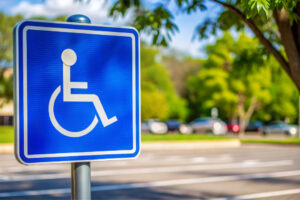
EV charging spaces require proper signage indicating EV only parking and any time restrictions. Signage must be mounted at the correct height and visibility per California Building Code.
Calvac Paving provides free ADA assessments for Bay Area properties planning EV charging installations. Our team identifies any ADA compliance gaps in existing parking areas and provides a written remediation plan as part of our project proposal.
For more information see our guide on ADA upgrades and compliance.
How Much Does EV Charging Parking Lot Paving Cost in the Bay Area?

The paving costs associated with an EV charging installation vary significantly depending on the size of the project, the number of chargers, conduit route lengths, and the current condition of the existing parking lot.
Typical paving cost components for a Bay Area EV charging project include:
Asphalt trench cutting and patching — priced per linear foot of trench or per square foot of patch area depending on scope.
Parking lot sealcoating — if the lot needs sealcoating before installation, sealcoating costs typically range from $0.15 to $0.35 per square foot for commercial properties.
Restriping — full lot re-striping including EV designated spaces and ADA markings is typically priced per stall or per linear foot.
ADA upgrades — if accessible parking stalls need to be reconfigured or upgraded to meet current requirements, costs vary based on scope and number of stalls.
Calvac Paving provides free detailed written estimates for all EV charging related paving projects throughout the Bay Area. Contact us to schedule a free site visit.
Why Bay Area Properties Should Plan EV Paving Now
The Bay Area has the highest EV adoption rate in the United States. Demand for EV charging from residents, tenants, employees, and customers is growing rapidly and will only accelerate as California moves toward its goal of all new car sales being zero emission vehicles by 2035.
Properties that plan EV charging infrastructure proactively are better positioned to attract and retain residents and tenants, meet California’s expanding regulatory requirements, avoid the higher cost of emergency reactive installations, and coordinate EV charging with planned pavement maintenance to minimize total project cost.
The lowest total cost approach is always to coordinate EV charging installation with planned pavement work — avoiding the need to cut through freshly sealcoated or newly overlaid asphalt.
Why Bay Area HOAs and Property Managers Choose Calvac Paving for EV Projects
Calvac Paving has been serving Bay Area commercial properties, HOA communities, and apartment complexes since 1974. Our team has extensive experience coordinating complex paving projects with electrical, civil, and general contractors — including the coordination required for EV charging installations in occupied parking lots.
We are members of CACM, BOMA, ACREM, and the Western Manufactured Housing Communities Association — the organizations that represent the Bay Area property managers and HOA communities we serve.
Every Calvac Paving project includes a two year workmanship warranty and a dedicated project manager who coordinates directly with all trades involved in your project.
Frequently Asked Questions About EV Charging Station Paving in the Bay Area
Does installing EV chargers require cutting through the parking lot asphalt?
In most cases yes. Installing EV chargers in an existing parking lot requires running electrical conduit beneath the asphalt surface from the building electrical panel to each charger location. This involves cutting through the asphalt, trenching for conduit, and then properly patching and restoring the asphalt after electrical inspection. Calvac Paving coordinates directly with electrical contractors to ensure all trench cuts are restored to commercial specifications.
Should I sealcoat my parking lot before or after EV charger installation?
Before — always. Completing sealcoating and any necessary crack sealing or repairs before EV charger installation avoids disrupting new conduit runs when pavement maintenance is needed. Installing chargers in a deteriorating lot and then needing to repave means tearing up the conduit work. Calvac Paving recommends a full pavement assessment before any EV charging project begins.
Does California require EV charging in existing apartment complexes?
The 2026 California building code mandate applies to new construction and major renovation projects. However many existing Bay Area apartment complexes are proactively installing EV charging to meet growing resident demand and to prepare for future requirements. PG&E and other Bay Area utilities offer incentive programs that may help offset installation costs.
Do EV charging spaces need to be ADA accessible?
Yes. California requires at least one EV charging space per installation to be van accessible and all EV spaces must have an accessible path of travel connecting them to the building entrance. Calvac Paving provides free ADA assessments for properties planning EV charging installations to identify and address any compliance gaps.
How long does parking lot paving work take for an EV charging project?
Timeline depends on the scope of the project. Trench patching after conduit installation typically takes one to two days for a standard commercial lot. If the project also includes sealcoating, crack sealing, or full lot restriping, allow two to four days total depending on lot size. Calvac Paving works with property managers to schedule all paving work to minimize disruption to residents, tenants, and customers.
Get a Free EV Charging Paving Assessment for Your Bay Area Property
If your HOA community, apartment complex, or commercial property is planning an EV charging installation or is evaluating EV readiness for your parking lot, Calvac Paving is ready to help with a free site assessment and detailed written proposal.
We serve properties throughout San Jose, Fremont, Santa Clara, Sunnyvale, Mountain View, Palo Alto, Milpitas, Campbell, Morgan Hill, Gilroy, Cupertino, and all surrounding Bay Area communities.
Call us at (408) 225-7700 or fill out our contact form to schedule your free site visit. We respond within one business day.