
Managing an industrial facility means thinking about a lot more than what happens inside the building.
Outside, your pavement is working every day.
Delivery trucks are coming and going. Forklifts and equipment may cross loading areas. Employees and visitors need safe access. Trailers need room to maneuver. Loading docks have to stay accessible. And when pavement work is necessary, shutting everything down for days may not be an option.
That is what makes industrial asphalt paving different from a typical parking lot project.
For facility managers, property managers, building owners, and operations teams in the San Francisco Bay Area, the goal is not simply to make old asphalt look better. Industrial pavement needs to support the way the property actually operates.
That means thinking about traffic, truck loads, drainage, pavement condition, access, scheduling, safety, and long term maintenance before paving begins.
And industrial properties remain a major part of the Northern California economy. According to CBRE’s Q1 2026 Northern California Industrial Report, the region had approximately 719.5 million square feet of industrial inventory, with another 6.94 million square feet under construction. Active tenant requirements totaled approximately 46.3 million square feet. Those numbers show just how much industrial property throughout Northern California needs to be operated, maintained, and protected.
If you manage a warehouse, distribution center, manufacturing facility, industrial park, truck yard, or other commercial property, here is what you should know about industrial asphalt paving in the Bay Area.

Industrial asphalt paving refers to asphalt construction, replacement, resurfacing, and repair for properties that experience the demands associated with industrial operations.
That may include:
Warehouses
Distribution centers
Manufacturing facilities
Logistics centers
Truck yards
Industrial parks
Business parks
Loading areas
Commercial facilities
Employee parking areas
Heavy traffic access roads
The basic material may still be asphalt, but the demands placed on industrial pavement can be very different from those of a smaller commercial parking lot.
A facility that regularly handles tractor trailers, delivery vehicles, service trucks, or heavy equipment needs pavement that is appropriate for those conditions.
The Federal Highway Administration specifically identifies traffic volume, vehicle classifications, truck weights, cumulative loads, foundation conditions, and drainage among important considerations in pavement design.
For facility managers, the takeaway is straightforward: pavement should be planned around how the property is actually used.
A warehouse parking lot might look like any other large asphalt surface from a distance.
The real difference is what happens on it.
Industrial facilities may have trucks entering and leaving throughout the day. Those vehicles can repeatedly travel the same routes, stop in the same areas, turn near the same loading docks, and place concentrated loads on the pavement.
FHWA pavement design guidance places particular importance on obtaining accurate truck volume, classification, and weight information when designing pavement structures.That is why an industrial paving contractor should understand more than the total square footage of the property.
Important questions include:
How many trucks use the property?
What types of trucks are they?
Where do they enter and exit?
Where do trucks turn?
Where do trailers wait?
Where are loading docks located?
Which areas experience the most stopping and starting?
Does heavy equipment regularly cross the pavement?
Are certain pavement areas already failing faster than others?
Two industrial facilities with the same square footage can have very different paving requirements.
The asphalt surface is only one part of a pavement system.
FHWA guidance identifies a uniform, stiff, moisture resistant foundation as one of the most important aspects of pavement structural design.
If the underlying pavement structure is failing, simply placing new asphalt over the top may not address the actual problem.
This is especially important at industrial properties where heavy vehicle traffic can expose weak areas quickly.
Water and pavement are not a good combination.
Poor drainage can contribute to premature pavement deterioration, especially where water enters cracks or reaches vulnerable layers beneath the asphalt.
Facility managers should pay attention to:
Standing water
Low spots
Drainage inlets
Water near loading areas
Cracks around drains
Pavement depressions
Areas where runoff repeatedly crosses asphalt
A paving project is a good opportunity to evaluate whether drainage is contributing to existing pavement problems.

Industrial paving is not limited to giant warehouses.
The Bay Area has a wide variety of industrial and commercial facilities that depend on asphalt every day.
Warehouses and distribution centers often have some of the most demanding pavement conditions.
Trucks need to enter, maneuver, park, load, and leave efficiently. Employees and delivery vehicles may use the same property at the same time.
In 2025, CBRE reported a 212,683 square foot full building lease at the San Jose Logistics Center. The facility includes 27 dock high doors, trailer parking, and direct access to major transportation corridors.
That gives you an idea of the scale and traffic patterns associated with modern Bay Area logistics properties.
For a distribution facility, pavement is not simply part of the landscaping. It is part of the operation.
Manufacturing properties can present a different set of challenges.
Depending on the operation, the pavement may need to accommodate:
Heavy delivery vehicles
Raw material deliveries
Finished product shipments
Employee traffic
Equipment movement
Waste collection vehicles
Emergency access
Loading and unloading
The paving plan should reflect how all of those activities move around the property.
Truck yards can place significant demands on pavement because heavy vehicles repeatedly travel, turn, stop, and park in concentrated areas.
Signs of pavement distress in a truck yard should be evaluated before they spread into larger operational problems.
Industrial parks may combine several different pavement uses.
One section may primarily serve passenger vehicles while another handles regular truck traffic. Shared access roads may serve several tenants.
That makes planning particularly important because the pavement requirements may vary across the property.
Loading docks and loading zones deserve special attention.
Trucks repeatedly approach the same areas and often turn, brake, or remain stationary while loading.
A pavement evaluation should look closely at these high use areas instead of treating the entire property as one uniform surface.

Not every pavement problem requires complete replacement.
The first step is understanding what is happening.
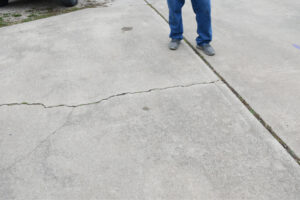
Cracks can develop as asphalt ages and pavement conditions change.
A few isolated cracks may be candidates for preventive maintenance. Extensive interconnected cracking can indicate more serious deterioration.
Facility managers should monitor whether cracks are:
Growing wider
Connecting with other cracks
Appearing in high traffic areas
Allowing vegetation to grow
Associated with standing water
Developing around previous repairs
Potholes are more than an appearance problem at an industrial property.
They can interfere with vehicles, create complaints, and signal pavement deterioration that should be investigated.
Repairing the pothole may be necessary, but understanding why the area failed can be just as important.
If wheel paths or frequently traveled areas begin developing depressions, the pavement may be experiencing problems related to repeated loading, pavement materials, or the underlying structure.
Standing water inside these depressions can make matters worse.
Interconnected cracks (alligator cracking)that resemble alligator skin often indicate more substantial pavement distress.
Simply filling those cracks may not solve an underlying structural problem.
A professional pavement assessment can help determine whether the area requires removal and replacement rather than a surface treatment.
If the same areas stay wet after rain, water collects near drains, or pavement begins failing around drainage structures, the drainage conditions should be evaluated along with the asphalt.
Fixing pavement without considering the source of recurring water problems may lead to the same issue returning.
One of the biggest questions facility managers face is how much work is actually necessary.
There is no universal answer.
The right approach depends on pavement condition, structural integrity, traffic, drainage, age, and how the facility operates.
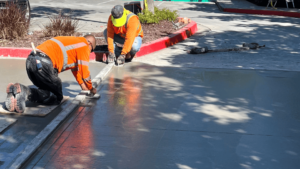
Localized asphalt repair may make sense when deterioration is limited to specific areas.
Damaged pavement can be removed and replaced without necessarily rebuilding an entire parking lot or industrial yard.
This can be useful for:
Failed sections
Potholes
Damaged loading areas
Localized cracking
Depressions
Utility cut repairs
Resurfacing can be an option when the existing pavement structure remains suitable but the asphalt surface has deteriorated.
A new asphalt surface is placed over properly prepared existing pavement.
The existing pavement needs to be evaluated first because resurfacing over major structural failures will not make those underlying problems disappear.
When pavement has widespread structural deterioration, complete removal and replacement may be the better long term approach.
This provides an opportunity to address problems beneath the surface and construct pavement appropriate for the property’s needs.
A pavement that looks rough may still have a usable underlying structure.
Another pavement may look acceptable from a distance while showing signs of deeper failure.
That is why an on site assessment is important before deciding between asphalt repair, resurfacing, and replacement.
Industrial properties are privately maintained, so regional public road statistics do not directly measure the condition of warehouse parking lots or truck yards.
They do, however, provide useful context about pavement conditions throughout the Bay Area.
The Metropolitan Transportation Commission reported in November 2025 that the Bay Area’s approximately 44,000 lane miles of local streets and roads had an average Pavement Condition Index score of 67 out of 100.
The regional average has remained at 67 for ten consecutive years.
MTC classifies that condition as fair and notes that a typical stretch of pavement at that level shows serious wear and is likely to require rehabilitation relatively soon.
The 2025 report also provides useful county level context based on 2024 pavement data:
Santa Clara County averaged a PCI of 73
San Mateo County averaged a PCI of 70
Contra Costa County averaged a PCI of 69
Alameda County averaged a PCI of 68
MTC notes that pavement deterioration can accelerate as conditions approach a PCI score of 60.
Again, those figures measure public roads rather than industrial properties. But the lesson for facility managers is relevant: delaying pavement maintenance indefinitely can eventually turn preservation work into rehabilitation work.
Industrial real estate continues to represent a substantial amount of property in Northern California.
CBRE reported that the broader Northern California market contained approximately 719.5 million square feet of industrial inventory at the end of Q1 2026.
In Silicon Valley specifically, industrial leasing activity reached 2.23 million square feet during Q2 2025, its highest quarterly level since Q3 2021.
Large facilities were part of that activity. CBRE reported that approximately 40 percent of Silicon Valley industrial deals signed during Q3 2025 were 100,000 square feet or larger.
And the activity has continued into 2026.
In April 2026, CBRE announced a 104,400 square foot industrial lease at a 5.34 acre property on Monterey Road in San Jose.
For facility managers, property owners, and industrial property managers, these numbers demonstrate the scale of the Bay Area industrial sector.
All of those facilities have exterior infrastructure that needs to work.
Pavement is part of that infrastructure.
This is where industrial paving becomes as much about planning as asphalt.
A facility manager may not be able to simply close the property for several days.
Deliveries still need to arrive. Employees need access. Trucks need somewhere to go.
Before paving begins, identify:
Primary entrances
Secondary entrances
Truck routes
Loading docks
Employee parking
Visitor parking
Emergency access
Delivery schedules
Peak operating hours
Areas that cannot be blocked simultaneously
The paving contractor can then better understand the operational constraints of the project.
Large industrial asphalt paving projects may be divided into phases when appropriate.
Instead of closing an entire facility, work can sometimes be coordinated so different sections are completed at different times.
For example:
Complete one parking or travel area while traffic uses another section.
Shift operations after the first area becomes available.
Complete remaining high traffic or loading areas according to the project schedule.
The exact approach will depend on the property, pavement design, work required, weather, and operational needs.
Facility managers should know:
What areas will be closed?
When will closures begin?
When can traffic return?
Where should trucks enter?
Where should employees park?
Will loading docks remain accessible?
Who is the project contact?
How will schedule changes be communicated?
Clear communication can be just as important as the physical paving work.
Before choosing a Bay Area industrial paving contractor, ask questions that go beyond price.
Experience with industrial facilities matters because these properties can have different traffic patterns and operational requirements from conventional parking lots.
Ask how the contractor plans to coordinate work around employees, deliveries, trucks, tenants, and loading operations.
You should understand whether the recommendation involves preventive maintenance, localized repair, resurfacing, or replacement and why.
If water is contributing to pavement problems, you want to know before new asphalt goes down.
For an active industrial facility, the schedule and phasing plan can be critical.
Ask about long term pavement maintenance.
A good paving plan should not end the moment the final roller leaves the property.
New pavement still needs maintenance.
A long term industrial pavement maintenance plan can include:
Routine inspections
Crack sealing
Localized asphalt repairs
Pothole repair
Drainage monitoring
Periodic pavement evaluations
The goal is to identify smaller problems before they become larger failures.
MTC makes a similar point in its regional pavement guidance, noting that jurisdictions practicing pavement preservation can reduce long term maintenance costs and better protect their roadway investments.
Facility managers can apply the same basic principle to private industrial properties.
Industrial properties throughout the Bay Area serve technology, manufacturing, distribution, logistics, construction, service businesses, and many other industries.
Calvac Paving works throughout the San Francisco Bay Area, including San Jose and surrounding communities, providing asphalt paving and pavement maintenance services for commercial and industrial properties.
Every industrial site is different.
A warehouse may need a large scale resurfacing project.
A manufacturing facility may have localized pavement failures near loading areas.
A distribution center may need work completed in phases to maintain truck access.
The right solution begins with understanding the property rather than automatically recommending the same paving approach everywhere.
Industrial experience is easier to understand when you can put numbers behind it.
On a recent Bay Area distribution facility project, Calvac Paving completed approximately 101,775 square feet of asphalt paving.
The project involved approximately:
3,600 tons of asphalt
101,775 square feet of pavement
16 working days
Zero safety incidents
Completion on budget
For a large distribution facility, keeping a project organized involves more than delivering asphalt.
Scheduling, coordination, safety, equipment, crews, site access, and quality all have to work together.
Projects like this demonstrate why industrial paving experience matters when facility managers are evaluating contractors for larger properties.
Calvac Paving has served the San Francisco Bay Area since 1974.
That represents more than 50 years of experience working with asphalt, concrete, commercial properties, industrial facilities, parking lots, and pavement maintenance projects throughout the region.
Calvac Paving provides services including:
Asphalt paving
Asphalt repair
Pavement maintenance
Crack sealing
Sealcoating
Concrete work
Striping
ADA related pavement improvements
For industrial facility managers, the goal is to develop a solution that works for both the pavement and the operation happening around it.
Industrial asphalt paving is asphalt construction and maintenance designed for properties such as warehouses, manufacturing facilities, distribution centers, logistics facilities, industrial parks, and truck yards.
These properties can have unique pavement demands because of heavy vehicles, loading operations, and frequent traffic.
There is no single asphalt pavement design that is best for every industrial facility.
Traffic volumes, truck types and weights, existing soil and foundation conditions, drainage, climate, and expected use should all be considered.
FHWA guidance specifically emphasizes accurate truck volume, classification, and weight information when determining pavement structural requirements.
It depends on the size and condition of the property and the work being performed.
A localized repair might require relatively little time, while a large industrial paving project can take significantly longer.
For context, Calvac Paving recently completed a 101,775 square foot distribution facility project involving approximately 3,600 tons of asphalt over 16 working days.
That does not mean another project of the same size will have the same schedule. Every property should receive its own project plan.
Potentially.
Many industrial paving projects can be planned in phases to help maintain access to portions of a facility.
Whether this is possible depends on the property layout, type of work, available entrances, loading requirements, safety considerations, and project schedule.
Discuss operational requirements with your paving contractor during planning rather than after work begins.
Resurfacing generally involves placing a new asphalt surface over properly prepared existing pavement when the underlying pavement remains suitable.
Replacement involves removing existing pavement and rebuilding the affected pavement structure as required.
A pavement assessment can help determine which option is appropriate.
Possible signs include widespread structural cracking, recurring potholes, severe rutting, major settlement, failed pavement sections, and extensive deterioration.
However, visible appearance alone should not determine the solution.
Have the pavement professionally evaluated before deciding on replacement.
There is no universal inspection schedule for every property.
Facility managers should regularly monitor pavement and consider professional evaluations when cracking, potholes, drainage issues, rutting, or other signs of deterioration appear.
Properties with significant heavy truck traffic may deserve particularly close attention.
Yes. Calvac Paving performs commercial and industrial asphalt paving work in the Bay Area, including work for large distribution facilities.
One recent project included approximately 101,775 square feet of paving and 3,600 tons of asphalt.
Calvac Paving serves San Jose and communities throughout the San Francisco Bay Area.
Contact Calvac Paving to discuss your facility location and specific project requirements.
Calvac Paving has served the Bay Area since 1974.
In 2026, that represents more than 50 years of local paving experience.
Yes. Calvac Paving provides asphalt paving and repair along with pavement maintenance, crack sealing, sealcoating, striping, concrete work, and related services for commercial and industrial properties.
Industrial pavement has a job to do.
It supports employees, deliveries, trucks, equipment, loading operations, visitors, and the day to day movement that keeps a facility running.
When that pavement begins failing, the best solution is not always to cover it with another layer of asphalt.
A successful industrial paving project starts by understanding the condition of the pavement, how the facility operates, where heavy vehicles travel, how water moves across the property, and what areas need immediate attention.
From there, facility managers can make better decisions about asphalt repair, resurfacing, replacement, and preventive maintenance.
With the Northern California industrial market representing more than 719 million square feet of inventory as of Q1 2026, industrial properties remain an important part of the region’s infrastructure and economy.
Keeping those properties operating includes taking care of the pavement outside them.
Calvac Paving has been serving the San Francisco Bay Area since 1974 and has experience handling large commercial and industrial paving projects.
If you manage a warehouse, manufacturing facility, logistics center, distribution center, industrial park, or other commercial property in the Bay Area, contact Calvac Paving to schedule a pavement evaluation and start planning your next industrial asphalt project.
2645 Pacer Ln
San Jose, CA
95111
(408) 225-7700