
Topic: HOA

HOA Crack Sealing in the Bay Area | Calvac Paving

hoa-bay-area-crack-sealing-san-francisco

HOA Crack Sealing in the Bay Area

By Calvac Paving

Facebook
LinkedIn
Twitter
Pinterest
hoa-bay-area-crack-sealing-san-francisco

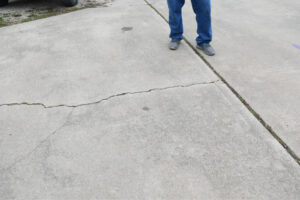
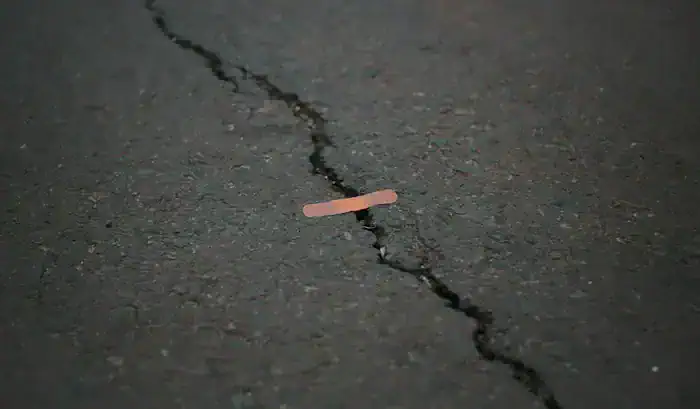
A few cracks in an HOA parking lot or private road may not look like a big deal. They are easy to drive over, easy to ignore, and usually do not seem urgent.

But cracks are often one of the first signs that an asphalt surface needs attention.

Once cracks open, rainwater can work its way into the pavement structure below. Over time, that moisture can contribute to weakened pavement, larger cracks, potholes, and more extensive asphalt repairs.

That is why HOA crack sealing in the Bay Area should be viewed as preventive maintenance rather than just a cosmetic improvement.

For HOA boards and property managers, addressing cracks early can help protect the community’s pavement, improve its appearance, and make future maintenance costs easier to plan.

And there is good reason to pay attention to pavement maintenance right now.

According to data released by the Metropolitan Transportation Commission in November 2025, the Bay Area’s roughly 44,000 lane miles of local streets and roads had an average Pavement Condition Index score of 67 out of 100. That was the tenth consecutive year the regional average remained at 67. MTC describes pavement at this level as being in “fair” condition, with the typical stretch showing serious wear and likely requiring rehabilitation in the relatively near future.

Your HOA’s private streets and parking areas are obviously different from public roads, but the regional numbers highlight an important point: pavement does not take care of itself.

Small maintenance decisions today can have a big impact on what an HOA has to deal with tomorrow.

What Is HOA Asphalt Crack Sealing?

Asphalt crack sealing is a pavement maintenance process designed to reduce the amount of water and debris entering cracks in an asphalt surface.

The Federal Highway Administration identifies crack treatment as both corrective and preventive pavement maintenance. The basic process involves cleaning appropriate cracks and sealing them with a material designed for the application. One of the main goals is to reduce the intrusion of water and other materials into the pavement structure.

For an HOA, crack sealing may be used on:

  • Private community streets

  • Asphalt parking lots

  • Shared driveways

  • Condominium developments

  • Townhome communities

  • Apartment and multifamily properties

  • Common parking areas

  • Community access roads

  • Asphalt around shared facilities

Not every crack should automatically receive the same treatment. The condition of the pavement, movement of the crack, surrounding deterioration, drainage, and underlying structural problems all matter.

That is why a pavement inspection is a smart first step.
 

hoa-bay-area-crack-sealing-companies

Why Do Bay Area HOAs Need Crack Sealing?

Bay Area pavement deals with more than vehicle traffic.

Asphalt is constantly exposed to sunlight, oxidation, temperature changes, water, vehicle fluids, delivery trucks, garbage trucks, resident vehicles, landscaping equipment, and everyday wear.

Eventually, cracks develop.

The important question for an HOA board is what happens next.

Water Can Turn a Surface Problem Into a Bigger Problem

One of the biggest reasons to seal appropriate asphalt cracks is water.

When a crack remains open, rainwater has another path into the pavement structure. The Federal Highway Administration notes that crack treatments are commonly used to prevent or substantially reduce water infiltration into asphalt pavement.

Crack sealing cannot magically make an aging pavement new again, and it cannot eliminate every possible source of moisture. It is one tool within a larger pavement maintenance strategy.

But reducing surface water infiltration is one reason crack sealing has been used for decades as a preventive pavement maintenance treatment.

For an HOA, that can mean addressing a manageable maintenance issue before residents are calling the property manager about potholes or badly deteriorated pavement.

Bay Area Pavement Is Already Showing Its Age

The latest MTC data gives HOA boards some useful regional context.

In November 2025, MTC reported that the Bay Area’s regional pavement score remained at 67 out of 100. MTC also notes that the region’s average is getting relatively close to a PCI score of 60, a point at which pavement deterioration can accelerate rapidly.

That does not mean every HOA road in the Bay Area has a PCI of 67. Private HOA pavement is not what this regional public-road statistic measures.

Instead, it shows the broader challenge facing asphalt throughout the region.

For HOA boards, the takeaway is simple: waiting until pavement visibly fails is rarely a good maintenance strategy.

What Happens When an HOA Ignores Asphalt Cracks?

A crack is not automatically a pavement emergency.

But it is worth investigating.

An untreated crack may continue to expand as the pavement moves and ages. Water can enter the opening, surrounding pavement can deteriorate, and eventually an area that may once have been a candidate for preventive maintenance may require a more involved repair.

Potential problems can include:

  • Wider or interconnected cracking

  • Water entering the pavement structure

  • Potholes

  • Loose or deteriorating asphalt

  • Depressed or failed areas

  • More extensive asphalt patching

  • Premature resurfacing needs

  • Larger future maintenance projects

The goal of HOA pavement maintenance is not to promise that cracks will never return. Asphalt naturally ages.

The goal is to identify problems early and use the right treatment at the right time.

hoa-bay-area-crack-sealing-asphalt-damage

Crack Sealing vs. Crack Filling: What’s the Difference?

The terms “crack sealing” and “crack filling” are sometimes used interchangeably, but technically they can refer to different treatments.

The Federal Highway Administration describes crack filling as generally placing bituminous material into nonworking cracks to reduce water infiltration. Crack sealing can involve more preparation and is often associated with cracks that experience movement.

The right treatment depends on the crack and pavement condition.

Crack Sealing

Crack sealing is generally intended for cracks where movement is expected. Preparation and the type of sealant used are important because the material needs to perform as the pavement moves.

Crack Filling

Crack filling is generally used for less active or nonworking cracks. The objective is still largely preventive: reduce water infiltration and slow additional deterioration.

For an HOA board, you do not necessarily need to diagnose every crack yourself.

A paving contractor should evaluate the pavement and recommend the appropriate treatment based on what is actually happening.

What Does the HOA Crack Sealing Process Look Like?

A professional crack sealing project should start before the sealant comes out.

1. Inspect the Pavement

The first step is determining the overall condition of the asphalt.

A contractor may look at:

  • Crack patterns

  • Crack severity

  • Drainage

  • Potholes

  • Failed asphalt

  • Surface oxidation

  • Previous repairs

  • Traffic patterns

  • Areas showing structural deterioration

This helps separate cracks that may benefit from sealing from areas that need a different type of asphalt repair.

2. Clean and Prepare Appropriate Cracks

Preparation matters.

Loose debris, dirt, vegetation, and other contaminants can interfere with the treatment. FHWA guidance describes cleaning cracks as part of routine crack treatment before sealant is applied.

3. Apply the Appropriate Crack Treatment

Depending on the crack and pavement conditions, an appropriate sealing or filling material is applied.

The material and installation method should match the conditions of the pavement. FHWA research notes that crack sealing performance can depend on factors including sealant properties, installation methods, temperature extremes, traffic levels, pavement condition, and crack movement.

4. Build Crack Sealing Into a Larger Maintenance Plan

Crack sealing is rarely the only pavement maintenance an HOA will ever need.

Depending on the property, a longer term plan might include:

  • Regular pavement inspections

  • Crack sealing

  • Asphalt patching

  • Pothole repair

  • Sealcoating

  • Striping

  • Drainage corrections

  • Resurfacing

  • Asphalt replacement

The advantage of a plan is that the HOA can prioritize work instead of reacting every time a new pavement problem appears.

Crack Sealing vs. Sealcoating

This is another common source of confusion.

Crack sealing and sealcoating are not the same service.

Crack Sealing Targets Individual Cracks

Crack sealing treats appropriate openings in the asphalt and helps reduce water and debris entering those cracks.

Sealcoating Protects the Asphalt Surface

Sealcoating is applied over a broader asphalt surface. It can help protect asphalt from oxidation, sun exposure, water penetration, and other surface wear while also giving older asphalt a cleaner, more uniform appearance.

For many HOA properties, crack repair or crack sealing is completed before sealcoating.

Think of it this way:

Crack sealing addresses specific openings.

Sealcoating addresses the pavement surface.

Neither is a substitute for repairing pavement that has already structurally failed.

When Is Crack Sealing Not Enough?

This is an important question for HOA boards because there is a point where preventive maintenance is no longer the appropriate answer.

If an area has severe interconnected cracking, deep potholes, base failure, major settlement, or widespread structural deterioration, simply putting sealant into the cracks will not repair the underlying problem.

Those areas may require:

  • Asphalt removal and replacement

  • Full depth repairs

  • Patching

  • Milling

  • Resurfacing

  • Drainage improvements

  • More extensive reconstruction

A reputable Bay Area paving contractor should be willing to tell an HOA when crack sealing makes sense and when it does not.

Spending money on the wrong treatment is not preventive maintenance.

When Should Bay Area HOAs Inspect Their Asphalt?

A good habit is to inspect HOA pavement regularly and after periods of heavy weather.

The exact maintenance schedule will depend on the age, condition, drainage, traffic, construction, and previous maintenance history of the property.

HOA boards and property managers should keep an eye out for:

  • New cracks

  • Existing cracks getting wider

  • Standing water

  • Potholes

  • Crumbling pavement edges

  • Loose aggregate

  • Depressions

  • Faded or oxidized asphalt

  • Failed patches

  • Drainage problems

You do not need to wait until the annual budget meeting to notice these issues.

Take photos, record locations, and track whether the problem is changing.

That information can also help your paving contractor understand how quickly an area is deteriorating.

Should HOAs Seal Cracks Before the Bay Area Rainy Season?

When practical, addressing appropriate cracks before extended wet weather can make sense because one of the primary purposes of crack treatment is reducing water infiltration.

That does not mean there is one universal “crack sealing month” for every HOA in Northern California.

Weather, pavement temperature, surface conditions, the sealant being used, and the scope of work can all affect scheduling.

Instead of waiting for the first major storm to think about pavement, property managers can make pavement inspections part of their planning process earlier in the year.

A simple HOA pavement checklist might include:

  • Inspect private roads and parking areas

  • Photograph developing cracks

  • Identify potholes or failed areas

  • Check drainage and standing water

  • Request a professional pavement assessment

  • Separate immediate repairs from preventive maintenance

  • Budget future phases of work

That is much easier than trying to organize a major pavement project after problems have already accelerated.

Why HOA Boards Should Think in Years, Not Just This Year’s Budget

One of the biggest mistakes an HOA can make is viewing pavement maintenance as a series of unrelated repair bills.

Private streets and parking lots are long term community assets.

A better approach is to create a pavement maintenance strategy that looks several years ahead.

A Long Term Plan Makes Budgeting Easier

Instead of discovering a major paving expense unexpectedly, the board can identify likely future needs and begin planning for them.

For example, a pavement plan might identify:

Immediate Needs

  • Failed asphalt repairs

  • Potholes

  • Drainage problems

  • Safety concerns

Preventive Maintenance

  • Crack sealing

  • Minor repairs

  • Sealcoating

  • Striping

Future Capital Improvements

  • Resurfacing

  • Larger asphalt replacement

  • Major rehabilitation

This allows an HOA to distinguish between pavement that needs attention now and pavement that simply needs to be monitored.

A Simple Asphalt Checklist for Bay Area HOA Boards

You do not need to be a paving expert to ask good questions.

When walking your property, look for these signs:

  • Are cracks becoming longer or wider?

  • Are multiple cracks connecting?

  • Is water collecting near cracked areas?

  • Are potholes starting to develop?

  • Is asphalt breaking apart around drains?

  • Are previous patches failing?

  • Are parking areas showing heavy wear?

  • Are private streets cracking near their edges?

  • Is the pavement noticeably faded or oxidized?

  • When was the property’s last professional pavement inspection?

  • Does the HOA have a multi year pavement maintenance plan?

If you cannot answer the last two questions, those are good places to start.

HOA Crack Sealing in San Jose and the Bay Area

Bay Area HOA communities come in many forms.

A large condominium development in San Jose may have private streets, parking stalls, fire lanes, and multiple entrances. A smaller townhome association may only be responsible for a private driveway and shared parking area.

The maintenance strategy should fit the property.

Calvac Paving works with commercial properties, property managers, HOAs, and other organizations throughout the San Francisco Bay Area.

Our goal is to evaluate the actual condition of the pavement and recommend the appropriate next step rather than treating every property the same way.

Why Work With Calvac Paving?

Calvac Paving has been serving the Bay Area since 1974.

That means more than 50 years of experience working with Bay Area asphalt, commercial properties, parking lots, private roads, and pavement maintenance projects.

For HOA boards and property managers, experience matters because pavement work affects residents, parking, vehicle access, schedules, and community budgets.

Calvac Paving can help evaluate pavement conditions and develop a practical approach that may include crack sealing, asphalt repair, sealcoating, striping, or larger paving work depending on the needs of the property.

Rather than waiting for cracks to become major pavement failures, HOA boards can take a proactive approach and understand what their asphalt needs now and what can wait.

FAQs About HOA Crack Sealing in the Bay Area

How often should an HOA seal asphalt cracks?

There is no single schedule that applies to every HOA. Pavement age, existing condition, traffic, drainage, weather exposure, and previous maintenance all affect how often cracks need attention.

Regular inspections are more useful than relying on an arbitrary calendar. If new cracks appear or existing cracks begin changing, have them evaluated.

Is crack sealing worth it for an HOA?

When the pavement and cracks are suitable for the treatment, crack sealing can be an important part of preventive asphalt maintenance.

FHWA recognizes crack sealing as a preventive maintenance activity, with reducing water infiltration being one of its primary purposes.

It will not repair structural pavement failure, so proper inspection is important.

Does crack sealing stop potholes?

Crack sealing cannot guarantee that a pothole will never develop.

However, water entering cracks can contribute to pavement deterioration. Reducing water infiltration is one reason crack treatment is used as preventive maintenance.

If an area is already failing structurally, it may require asphalt repair rather than crack sealing alone.

Should cracks be sealed before sealcoating?

Appropriate cracks and pavement failures generally need to be addressed before a broader surface treatment is applied.

Crack sealing and sealcoating perform different jobs, so an inspection should determine what preparation is necessary before sealcoating.

What is the difference between crack sealing and asphalt repair?

Crack sealing treats appropriate cracks in pavement.

Asphalt repair generally addresses areas where the pavement itself has deteriorated or failed and may require removing damaged asphalt and replacing it.

If the base or pavement structure is failing, crack sealant alone will not solve the problem.

Can an HOA seal cracks during the rainy season?

Weather and surface conditions matter when applying pavement maintenance products. Your paving contractor should determine whether conditions are appropriate for the specific material and application.

Planning ahead of prolonged wet weather can give an HOA more flexibility when scheduling preventive maintenance.

Can crack sealing be used on HOA private roads?

Yes. Crack sealing can be part of a preventive maintenance program for private HOA roads when the cracks and pavement are appropriate for the treatment.

Private roads should still be professionally inspected because some cracking can indicate underlying pavement problems that require more extensive repair.

Does Calvac Paving provide HOA paving services?

Yes. Calvac Paving works with HOAs, property managers, commercial properties, and other organizations throughout the Bay Area.

Services can include asphalt paving and repair, crack sealing, sealcoating, striping, and other pavement maintenance work depending on the needs of the property.

How long has Calvac Paving served the Bay Area?

Calvac Paving has served the San Francisco Bay Area since 1974, giving the company more than 50 years of local paving experience.

Does Calvac Paving offer a warranty?

Calvac Paving offers a two year workmanship warranty on qualifying work. Specific warranty coverage depends on the project and should be confirmed as part of your proposal.

Can Calvac Paving inspect our HOA pavement before we decide what work to do?

Yes. An inspection is one of the best places to start.

Instead of assuming every crack needs the same treatment, Calvac Paving can evaluate the pavement and help identify areas that may be candidates for preventive maintenance versus areas that need more substantial asphalt repair.

Protect Your HOA’s Asphalt Before Small Problems Become Bigger Ones

Cracks are easy to ignore.

Unfortunately, pavement deterioration rarely gets better on its own.

The Bay Area’s latest regional pavement data is a useful reminder. MTC reported in 2025 that the region’s average pavement condition remained at 67 out of 100 for the tenth consecutive year, and the agency warns that deterioration can accelerate as pavement approaches lower condition levels.

HOA boards cannot stop asphalt from aging, but they can decide how proactively they manage it.

Regular inspections, timely crack sealing, asphalt repairs, good drainage, sealcoating when appropriate, and long term pavement planning can help an HOA stay ahead of deterioration instead of constantly reacting to it.

If you manage an HOA, condominium community, townhome development, private road, or multifamily property in the San Francisco Bay Area, Calvac Paving can help you understand the condition of your pavement and determine the right next step.

With more than 50 years serving the Bay Area, Calvac Paving provides asphalt paving and pavement maintenance solutions built around the needs of each property.

Do not wait for a small crack to become the community’s next big maintenance problem.

Contact Calvac Paving to schedule an HOA pavement evaluation and start planning for the road ahead.
Get more Bay Area concrete paving tips below:


HOA Asphalt Repair in California Bay Area

HOA Asphalt Repair in California Bay Area

HOA Asphalt Repair in California Bay Area

A Practical Guide for HOA Managers by Calvac Paving

Facebook
LinkedIn
Twitter
Pinterest
HOA Asphalt Repair in California Bay Area

Managing roads inside a homeowners association is not always simple. Private streets, parking areas, and shared drive lanes take constant wear from vehicles, delivery trucks, and everyday traffic. Over time, that wear shows up as cracks, potholes, fading surfaces, and drainage issues.

For HOA managers in the California Bay Area, asphalt repair is one of the most important parts of maintaining a safe and attractive community.

The good news is that asphalt problems rarely appear overnight. Most pavement issues develop slowly, which means HOA managers who stay proactive can fix small problems before they become expensive reconstruction projects.

In this guide, Calvac Paving explains how HOA asphalt repair works, what warning signs to watch for, and how Bay Area HOAs can extend the life of their pavement.

Looking for an experienced asphalt contractor in San Jose? Calvac Paving has served the Bay Area since 1974.


Why Asphalt Maintenance Is Critical for HOA Communities

HOA roads are different from city streets. Instead of being maintained by a local government, they are the responsibility of the homeowners association. That means HOA boards and property managers must plan and budget for pavement maintenance.

When asphalt roads are properly maintained, the benefits are clear.

Smooth pavement improves safety for drivers, pedestrians, and cyclists. It also improves the appearance of the entire neighborhood. Clean, well maintained roads signal that a community is cared for and organized.

This can also influence property values. Buyers notice things like cracked streets and potholes, and poorly maintained pavement can make a community feel neglected.

On the other hand, proactive asphalt repair helps HOA managers avoid major costs. Small repairs such as crack sealing or pothole repair are far less expensive than full road replacement.

The key is catching problems early.


HOA Asphalt Repair in California Bay Area

Common Asphalt Problems in HOA Communities

HOA managers often ask how to tell when asphalt needs repair. The truth is that most pavement gives clear warning signs before serious damage occurs.

Here are the most common issues seen in Bay Area HOA neighborhoods.

Asphalt Cracks

Cracks are usually the first sign of asphalt deterioration. They form as pavement expands and contracts from temperature changes, traffic pressure, and aging.

While small cracks may not look serious, they allow water to enter the pavement structure. Once water reaches the base layer underneath the asphalt, the pavement can begin to weaken and break apart.

Crack sealing is one of the most important preventative maintenance services because it stops water from causing deeper damage.

Potholes

Potholes form when water enters cracks and weakens the pavement base. When vehicles drive over the weakened area, the asphalt collapses and creates a hole.

Potholes are more than just inconvenient. They can damage vehicles and create safety hazards for residents and visitors.

Fast repair helps prevent the pothole from spreading.

Alligator Cracking

Alligator cracking appears as a pattern of connected cracks that resemble reptile skin. This type of damage usually means the asphalt structure underneath has begun to fail.

When alligator cracking appears, repairs may require asphalt patching or resurfacing rather than simple crack sealing.

Drainage Issues

Standing water is one of the biggest threats to asphalt pavement. When water sits on the pavement surface, it slowly breaks down the asphalt and weakens the base layer underneath.

Proper drainage design is critical for long lasting HOA roads.


HOA Asphalt Repair in California Bay Area

Types of HOA Asphalt Repair Services

Not every pavement issue requires the same repair solution. The right approach depends on the condition and age of the asphalt.

Calvac Paving works with HOA managers across the California Bay Area to determine the best repair strategy for each community.

Crack Sealing

Crack sealing is one of the most cost effective ways to extend the life of asphalt pavement. The process involves cleaning and filling cracks with specialized sealant that prevents water infiltration.

HOAs that perform routine crack sealing often extend the life of their pavement by several years.

Pothole Repair

Potholes are repaired by removing damaged asphalt and replacing it with new material. In some cases infrared repair technology is used to heat the surrounding asphalt and blend the repair seamlessly with the pavement.

This creates a smoother and longer lasting fix.

Sealcoating

Sealcoating applies a protective layer over asphalt pavement. This coating protects the surface from sunlight, rain, oil spills, and oxidation.

Sealcoating also restores the deep black color of asphalt, improving the overall appearance of HOA streets and parking areas.

Many communities apply sealcoating every two to three years as part of their maintenance plan.

Asphalt Resurfacing

Resurfacing involves placing a new layer of asphalt over existing pavement. This is often recommended when asphalt is aging but the underlying base remains stable.

Resurfacing restores the surface of the road and extends the pavement lifespan without requiring full reconstruction.

Full Asphalt Replacement

If pavement damage is widespread or the base layer has failed, full replacement may be required.

This process removes the existing asphalt and rebuilds the pavement structure from the base up.

Although replacement is the most extensive repair option, proper maintenance can delay this step for many years.


Creating a Long Term Pavement Maintenance Plan

For HOA managers, one of the most valuable strategies is developing a long term pavement maintenance plan.

Instead of reacting to problems, a maintenance plan schedules preventative services at the right time.

A typical HOA pavement lifecycle looks something like this.

Years 1 to 3
Routine inspections and crack sealing.

Years 3 to 5
Sealcoating to protect the surface.

Years 6 to 10
Localized patching and repair work.

Years 12 to 15
Asphalt resurfacing.

Years 20 plus
Full pavement replacement if necessary.

Following this type of schedule helps HOA managers avoid emergency repairs and budget surprises.


Tips for HOA Managers Planning Asphalt Repairs

Pavement projects affect the entire community, so good planning is important. Here are a few tips that can help HOA managers manage asphalt repair projects more smoothly.

Conduct Regular Pavement Inspections

Walking or driving through the property a few times per year helps identify cracks, drainage issues, and early signs of pavement failure.

Early detection allows repairs to be scheduled before problems spread.

Budget Through Reserve Planning

HOA reserve studies often include pavement replacement timelines. By understanding the expected life of the asphalt, HOA boards can plan future repair costs.

Preventative maintenance helps stretch those reserve funds further.

Communicate With Residents

Asphalt work often requires temporary road closures or parking restrictions.

Giving residents advance notice helps prevent confusion and ensures vehicles are moved before work begins.


HOA Asphalt Repair in California Bay Area

Why HOA Managers Choose Asphalt for Community Roads

Asphalt remains the most common material used for HOA roads and parking areas.

One reason is flexibility. Asphalt can handle heavy traffic and small ground movements without cracking as easily as some other materials.

Another advantage is repairability. Asphalt repairs can often be completed quickly, which minimizes disruption for residents.

For HOA communities, asphalt offers a good balance of durability, cost efficiency, and maintainability.


HOA Asphalt Repair in the California Bay Area

HOA communities across the California Bay Area face unique pavement challenges.

Seasonal rains, traffic from delivery vehicles, and aging infrastructure all contribute to asphalt wear.

That is why many HOA managers rely on experienced paving contractors who understand local conditions and can provide long term pavement solutions.

Calvac Paving has been serving communities across the Bay Area for over 50 years. The company works with HOA boards and property managers to maintain private roads, parking areas, and community infrastructure.

Services include:

HOA asphalt repair
Crack sealing
Pothole repair
Sealcoating
Asphalt resurfacing
Full pavement replacement

By combining preventative maintenance with professional repairs, Calvac Paving helps HOA communities extend the life of their pavement and protect their budgets.


FAQs About HOA Asphalt Repair in California:

How often should HOA asphalt roads be repaired?

Minor repairs such as crack sealing may be needed every year. Sealcoating is typically recommended every two to three years, while resurfacing may be required every 12 to 15 years depending on traffic and weather.

What causes asphalt roads in HOAs to fail?

Common causes include water infiltration, heavy traffic, aging pavement, and poor drainage. Regular maintenance helps prevent these issues from turning into major pavement failure.

How long does HOA asphalt pavement last?

With proper maintenance, asphalt pavement can last 20 to 25 years before needing full replacement.

How can HOA managers reduce road repair costs?

Preventative maintenance is the most effective way to control costs. Crack sealing, sealcoating, and regular inspections help extend pavement life and delay expensive reconstruction.


Calvac Paving San Jose Careers and job Logo

FAQs About Calvac Paving:

Does Calvac Paving work with HOA managers?

Yes. Calvac Paving regularly works with HOA managers, boards, and property management companies throughout the California Bay Area.

What services does Calvac Paving provide for HOA communities?

Calvac Paving provides asphalt repair, crack sealing, pothole repair, sealcoating, resurfacing, and full pavement replacement.

How long has Calvac Paving been serving the Bay Area?

Calvac Paving has over 50 years of experience working with communities and businesses throughout the Northern California Bay Area.


Work With HOA Asphalt Experts in the Bay Area

Managing HOA roads requires experience, planning, and the right contractor. Addressing pavement issues early helps protect your community’s infrastructure, improve safety, and control long term repair costs.

If your HOA roads are showing signs of wear, now is the time to take action.

Calvac Paving has been helping HOA communities maintain and repair asphalt pavement in the California Bay Area for over 50 years. Their team understands the unique needs of HOA managers and works closely with communities to develop practical pavement maintenance plans.

To learn more about HOA asphalt repair or to schedule a pavement evaluation, contact Calvac Paving and speak with a team that specializes in HOA pavement solutions across the Bay Area.

Get more HOA paving tips below:


HOA Reserve Study for Roads and Pavement in the California Bay Area

HOA Reserve Study for Roads and Pavement in the California Bay Area

HOA Reserve Study for Roads and Pavement in the California Bay Area

A HOA Reserve Study Guide

Facebook
LinkedIn
Twitter
Pinterest
HOA Reserve Study for Roads and Pavement in the California Bay Area

Homeowner associations across the California Bay Area manage some of the most valuable shared infrastructure in their communities. One of the biggest responsibilities is maintaining private roads, parking lots, and pavement systems.

An HOA reserve study for roads and pavement helps HOA boards and property managers plan for these costs before problems become expensive emergencies.

For many Bay Area communities, asphalt streets and parking areas are among the largest long term maintenance expenses. When roads are ignored too long, small cracks turn into potholes and eventually full reconstruction projects.

This guide explains how reserve studies work and how HOA managers can plan pavement maintenance the right way.

Looking for an experienced asphalt contractor in San Jose? Calvac Paving has served the Bay Area since 1974.


What Is an HOA Reserve Study

An HOA reserve study is a long term financial and physical planning report used by homeowner associations to prepare for major repairs and replacements of shared community assets.

These assets usually include

• Private roads
• Asphalt streets
• Parking lots
• Sidewalks
• Curbs and gutters
• Clubhouses and pools
• Roof systems

The reserve study evaluates the condition of each component and estimates how long it will last. It also calculates how much money the HOA should save each year to pay for future repairs.

For HOAs in the California Bay Area, pavement maintenance is often one of the biggest items in a reserve study because many communities have private road networks.


Why Roads and Pavement Are Critical in Reserve Studies

Many HOA boards underestimate the cost of maintaining asphalt roads. Pavement does not fail overnight. It deteriorates slowly through traffic, weather, and time.

A typical asphalt life cycle includes

  1. Crack sealing and minor repairs

  2. Sealcoating

  3. Asphalt overlay

  4. Full reconstruction

If maintenance happens on schedule, roads can last decades. If maintenance is delayed, the pavement can deteriorate quickly and require full replacement.

Reserve studies help HOA managers plan these stages in advance so they can avoid large surprise costs.


What Is Included in an HOA Reserve Study

A reserve study typically includes two major parts.

Physical Analysis

The physical analysis evaluates the condition of community assets. Inspectors look at components such as roads and parking areas and determine

• Current condition
• Remaining useful life
• Maintenance needs
• Estimated replacement timeline

For pavement systems, this might include evaluating

• cracking
• surface wear
• drainage issues
• pavement thickness

Financial Analysis

The financial portion calculates how much money the HOA should contribute to reserve funds each year.

This includes

• projected repair costs
• inflation adjustments
• funding schedules
• reserve contribution recommendations

This plan helps HOAs maintain infrastructure without placing sudden financial pressure on homeowners.


HOA Reserve Study for Roads and Pavement in the California Bay Area

Is a Reserve Study Required for HOAs in California

Yes. California law requires HOAs to review reserve funding regularly.

Under California Civil Code requirements, HOAs must conduct a full reserve study every three years and perform annual financial reviews in between. These studies help boards evaluate major components and ensure reserve funds are adequate for future repairs.

For Bay Area HOA managers, this requirement makes reserve planning an important part of responsible property management.


What Is the Purpose of an HOA Reserve Study

The main goal of a reserve study is to protect the long term financial health of the community.

A well prepared reserve study helps HOAs

• plan major repairs years in advance
• avoid sudden special assessments
• maintain stable HOA dues
• preserve property values

When pavement projects are included in the reserve study, HOA boards can plan road resurfacing before damage becomes severe.


How Much Should an HOA Have in Reserves in California

Industry professionals often consider a community to be financially healthy when it is at least seventy percent funded.

This means the reserve account contains enough money to cover most future repairs identified in the reserve study.

Communities that are significantly underfunded may face problems such as

• emergency repairs
• homeowner special assessments
• deferred infrastructure maintenance

Road resurfacing projects are often one of the biggest costs that impact reserve funding levels.


New HOA Rules in California That Boards Should Know

California periodically updates HOA regulations that affect community governance and homeowner rights.

Recent laws have placed limits on certain HOA fines. In many cases, fines are now capped at one hundred dollars per violation unless specific conditions apply.

While this rule focuses on homeowner penalties rather than infrastructure, it highlights the importance of strong financial planning through reserve funds instead of relying on fines to support budgets.


Pavement Maintenance Planning for Bay Area HOAs

HOA managers should treat roads and parking areas as long term assets that require routine maintenance.

Common pavement services for HOAs include

Crack Repair

Sealing cracks prevents water from entering the pavement structure and causing deeper damage.

Sealcoating

Sealcoating protects asphalt from UV exposure, oxidation, and traffic wear.

Asphalt Overlay

An overlay adds a new asphalt surface layer to extend pavement life.

Full Reconstruction

If pavement has deteriorated beyond repair, reconstruction may be necessary.

Reserve studies help HOA boards schedule these projects before major structural damage occurs.


Why HOA Managers Work with Experienced Paving Contractors

Reserve study consultants often need accurate pavement cost estimates when preparing reports. Working with an experienced paving contractor can help ensure the reserve study reflects real world maintenance needs.

A professional paving contractor can

• inspect road conditions
• estimate repair timelines
• provide maintenance plans
• help prioritize pavement projects

This collaboration allows HOA managers to make smarter long term infrastructure decisions.


HOA Reserve Study for Roads and Pavement in the California Bay Area

FAQs About HOA Reserve Study for Roads and Pavement

What is an HOA reserve study

An HOA reserve study is a report that analyzes the condition and future replacement cost of major shared assets in a community such as roads, parking lots, roofs, and pools.

Why are roads included in reserve studies

Private roads are expensive to maintain and replace. Including pavement in the reserve study allows HOAs to save money over time and plan resurfacing projects before the roads fail.

How often must California HOAs update reserve studies

California HOAs must conduct a full reserve study every three years and review the reserve funding plan annually.

What happens if an HOA does not have enough reserve funds

If reserves are too low, the HOA may need to issue special assessments to homeowners or delay critical repairs.

How long do HOA asphalt roads last

With proper maintenance, asphalt roads can last twenty to thirty years. Without maintenance, they may fail much sooner.


FAQs About Calvac Paving

Who is Calvac Paving

Calvac Paving is a professional paving contractor serving communities throughout the California Bay Area.

What services does Calvac Paving provide for HOAs

Calvac Paving provides services such as

• asphalt paving
• parking lot resurfacing
• sealcoating
• crack repair
• pavement maintenance
• road reconstruction

Does Calvac Paving work with HOA reserve studies

Yes. Calvac Paving frequently works with HOA boards and property managers to inspect pavement conditions and provide cost estimates for reserve studies.

How long has Calvac Paving served the Bay Area

Calvac Paving has been serving Bay Area communities for over 50 years, helping HOAs maintain safe and long lasting roads and parking areas.


Work with Bay Area HOA Paving Experts

If your HOA manages private roads or parking lots, planning ahead is essential. A strong reserve study combined with proactive pavement maintenance can save your community significant money over time.

Calvac Paving has worked with homeowner associations across the California Bay Area for more than five decades, helping communities maintain safe roads, extend pavement life, and plan long term maintenance.

If your HOA reserve study includes upcoming pavement work, contact Calvac Paving to schedule a pavement evaluation and maintenance plan. Their team understands the needs of Bay Area HOAs and can help your community protect its infrastructure for years to come.


Get more Bay Area concrete paving tips below:


HOA Road Maintenance Guide in the Bay Area

HOA Road Maintenance in the Bay Area

HOA Road Maintenance in the Bay Area

A HOA Guide for the Bay Area.

Facebook
LinkedIn
Twitter
Pinterest
HOA Road Maintenance in the Bay Area

Homeowners Associations across the California Bay Area manage more than homes. They manage the roads residents drive every day. Parking areas, private streets, and community access roads all require regular care to stay safe and functional.

Without proper HOA road maintenance, small pavement issues can quickly become expensive repairs. Cracks grow, water gets underneath the asphalt, and before long the road surface begins to fail.

This guide explains how HOA boards and property managers in the Bay Area can maintain their roads properly, extend pavement life, and avoid costly reconstruction.

Looking for an experienced asphalt contractor in San Jose? Calvac Paving has served the Bay Area since 1974.


What Is Road Maintenance?

Road maintenance refers to the ongoing work required to keep roads safe, smooth, and structurally sound. It includes inspections, repairs, and preventative treatments that protect the pavement from wear, weather, and traffic.

For HOA communities in the Bay Area, this usually includes:

• Asphalt crack repair
• Sealcoating and slurry seal
• Pothole repairs
• Asphalt resurfacing
• Drainage adjustments
• Parking lot striping
• Full asphalt replacement when needed

The goal is simple. Protect the pavement before major damage happens.

When roads are maintained regularly, they last significantly longer and cost much less to manage over time.


Why HOA Road Maintenance Matters

HOA communities often rely on private roads, meaning the association is responsible for upkeep rather than the city.

For property managers, proper pavement maintenance helps:

Improve Safety

Cracked pavement, potholes, and uneven surfaces create hazards for residents, pedestrians, and vehicles.

Protect Property Values

Well maintained roads make a community look cared for and professional.

Reduce Long Term Costs

Preventative maintenance can extend asphalt life by 10 to 15 years.

Avoid Liability Issues

Unsafe pavement conditions can lead to accidents and insurance claims.

For HOAs in San Jose, Fremont, Palo Alto, Sunnyvale, and surrounding Bay Area cities, proactive road maintenance is an essential part of property management.


The 4 Types of Road Maintenance

Understanding the main categories of maintenance helps HOA managers plan budgets and maintenance schedules.

1. Preventive Maintenance

Preventive maintenance protects pavement before damage spreads.

Examples include:

• Sealcoating
• Slurry seal
• Crack sealing
• Striping refresh

These services are cost effective and can extend pavement life significantly.


2. Corrective Maintenance

Corrective maintenance fixes minor damage that has already appeared.

Examples include:

• Pothole repairs
• Surface patching
• Asphalt leveling
• Drainage adjustments

This type of maintenance prevents small issues from becoming major failures.


3. Routine Maintenance

Routine maintenance includes regular inspections and minor upkeep that keeps roads functioning properly.

Examples include:

• Sweeping
• Debris removal
• Drain clearing
• Line repainting

Routine attention helps HOA managers identify problems early.


4. Emergency Maintenance

Emergency maintenance addresses sudden or severe pavement failures.

Examples include:

• Sinkholes
• Severe potholes
• Flood damage
• Asphalt collapse

Emergency work restores safety quickly until permanent repairs can be completed.


HOA Road Maintenance in San Francisco

How to Improve HOA Road Maintenance

Many HOAs wait until roads begin failing before taking action. This approach leads to higher costs.

Instead, communities should adopt a proactive maintenance strategy.

Create a Pavement Maintenance Plan

A long term maintenance plan helps HOA boards forecast costs and avoid surprise repairs.

Typical HOA pavement plans include:

• Annual inspections
• Crack sealing every 2 to 3 years
• Slurry seal every 5 to 7 years
• Asphalt resurfacing every 15 to 20 years


Conduct Regular Inspections

HOA property managers should inspect roads at least once per year and after heavy storms.

Look for:

• Cracks forming in asphalt
• Standing water
• Fading striping
• Loose gravel
• Surface wear

Early detection keeps repair costs low.


Budget for Preventative Work

Preventative maintenance costs far less than reconstruction.

For example:

• Crack sealing costs a small fraction of asphalt replacement
• Slurry seal can extend pavement life by many years
• Ignoring cracks allows water to destroy the road base

Planning ahead protects HOA budgets.


How HOA Road Maintenance Is Done

When HOA boards hire a professional paving contractor like Calvac Paving, the maintenance process usually follows several steps.

Step 1: Pavement Inspection

A full evaluation of the road surface identifies:

• Structural damage
• Drainage issues
• Surface wear
• Areas needing repair


Step 2: Repair Existing Damage

Before sealing or resurfacing, any damage must be repaired.

Typical repairs include:

• Crack sealing
• Asphalt patching
• Pothole repair


Step 3: Preventative Treatment

Once repairs are complete, preventative treatments protect the surface.

Common options include:

• Slurry seal
• Sealcoating
• Asphalt overlay


Step 4: Final Striping and Markings

After pavement work is complete, the road is re striped with fresh markings for:

• Parking stalls
• Fire lanes
• Directional arrows
• ADA compliance markings


Common HOA Road Problems in the Bay Area

Bay Area pavement faces unique challenges.

Tree Root Damage

Large trees common in Bay Area communities often push asphalt upward, causing cracks and uneven pavement.


Drainage Issues

Poor drainage allows water to seep beneath asphalt, weakening the base and causing failure.


Sun and Traffic Wear

Daily traffic combined with sun exposure slowly dries asphalt, making it brittle and prone to cracking.


Aging Pavement

Many HOA communities built decades ago now require resurfacing or full asphalt replacement.


Why HOA Managers Work With Calvac Paving

Calvac Paving has decades of experience serving HOA communities throughout the California Bay Area.

HOA boards and property managers choose Calvac Paving because we:

• Understand HOA project coordination
• Provide clear maintenance planning
• Minimize disruption to residents
• Deliver durable asphalt solutions
• Offer preventative maintenance programs

From San Jose to Oakland to Fremont, Calvac Paving helps communities keep their roads safe and well maintained.


FAQs About HOA Road Maintenance

What is road maintenance?

Road maintenance is the ongoing work required to keep pavement safe, smooth, and structurally sound. It includes inspections, crack repair, sealcoating, resurfacing, and other preventative treatments that extend the life of the road.


What are the four types of road maintenance?

The four primary types of maintenance include:

• Preventive maintenance
• Corrective maintenance
• Routine maintenance
• Emergency maintenance

Each type plays an important role in protecting pavement and reducing long term repair costs.


How often should HOA roads be maintained?

Most HOA roads should receive preventative maintenance every 3 to 5 years depending on traffic and pavement condition. Regular inspections help determine the right schedule.


How can HOAs improve road maintenance?

HOAs can improve road maintenance by:

• Creating long term pavement plans
• Conducting annual inspections
• Repairing cracks early
• Scheduling preventative treatments like slurry seal

These steps extend pavement life and reduce repair costs.


Who is responsible for HOA road maintenance?

In communities with private roads, the homeowners association is responsible for maintenance and repairs. The HOA board or property manager typically hires a paving contractor to perform the work.


HOA Road Maintenance in the Bay Area

FAQs About Calvac Paving:

What services does Calvac Paving provide for HOAs?

Calvac Paving provides a full range of pavement services for HOA communities including:

• Asphalt repair
• Crack sealing
• Slurry seal
• Asphalt resurfacing
• Parking lot striping
• Pavement maintenance planning


Does Calvac Paving work throughout the Bay Area?

Yes. Calvac Paving serves HOA communities across the California Bay Area, including San Jose, Fremont, Palo Alto, Sunnyvale, Santa Clara, and surrounding cities.


How can HOA managers get a road inspection?

HOA property managers can contact Calvac Paving to schedule a pavement inspection and receive recommendations for maintaining their community roads.


How long does HOA road maintenance take?

The timeline depends on the size of the community and the type of work required. Many preventative maintenance projects can be completed in just a few days, minimizing disruption to residents.


Final Thoughts

HOA roads are a major asset for any community. With proper maintenance, asphalt surfaces can last decades while remaining safe and attractive.

For HOA managers across the Bay Area, the best strategy is simple:

Inspect early. Maintain regularly. Repair small problems before they grow.

If your community roads are showing signs of wear, Calvac Paving can help you create a maintenance plan that protects both your pavement and your HOA budget.

Want to talk to an expert, reach out to Calvac Paving today. We have over 50 years of experience serving HOAs in the Bay Area.

Get more Bay Area HOA road tips below:


Accessible Parking Requirements for Bay Area Businesses

Accessible Parking

Accessible Parking Requirements for Bay Area Businesses

A Guide to Compliance and Best Practices

Facebook
LinkedIn
Twitter
Pinterest
Accessible Parking

Accessible Parking Requirements for Bay Area Businesses: As a business owner in the Bay Area, ensuring your property is accessible to all customers isn’t just good practice—it’s the law. Accessible parking spaces are a critical part of compliance with the Americans with Disabilities Act (ADA) and the California Building Code (CBC). Failing to meet these requirements can result in costly fines, lawsuits, and damage to your reputation.

In this guide, we’ll break down the accessible parking requirements for businesses in the Bay Area, explain how to calculate the number of spaces you need, and share tips for maintaining compliance. If you’re in San Jose or the greater Bay Area, partnering with a professional paving company like Calvac Paving can ensure your parking lot meets all legal and safety standards.


Why Accessible Parking Matters

Accessible parking spaces are essential for ensuring that individuals with disabilities can safely and conveniently access your business. In California, the Bay Area is known for its commitment to inclusivity, and businesses must reflect this by providing adequate parking accommodations.

Beyond legal compliance, accessible parking spaces demonstrate your business’s dedication to serving all members of the community. This can enhance your reputation and attract a wider customer base.


Accessible Parking Requirements in California

The number of accessible parking spaces your business needs depends on the total number of parking spaces in your lot. Here’s a quick breakdown:

  • 1–25 spaces: 1 accessible space

  • 26–50 spaces: 2 accessible spaces

  • 51–75 spaces: 3 accessible spaces

  • 76–100 spaces: 4 accessible spaces

  • 101–150 spaces: 5 accessible spaces

  • 151–200 spaces: 6 accessible spaces

  • 201–300 spaces: 7 accessible spaces

  • 301–400 spaces: 8 accessible spaces

  • 401–500 spaces: 9 accessible spaces

  • 501–1,000 spaces: 2% of total spaces

  • 1,001+ spaces: 20 accessible spaces + 1 for every 100 spaces over 1,000

Van-Accessible Spaces

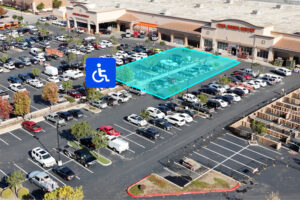
At least 1 in every 6 accessible spaces must be van-accessible. These spaces require:

  • A minimum width of 8 feet for the access aisle.

  • A vertical clearance of 98 inches to accommodate wheelchair lifts.

ADA requirements for parking lots

Key Features of Compliant Accessible Parking Spaces

To meet ADA and CBC standards, your accessible parking spaces must include:

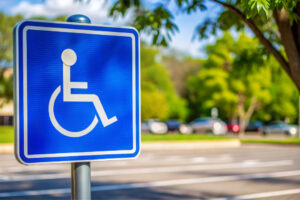
  1. Proper Signage: Clearly marked with the International Symbol of Accessibility.

  2. Access Aisles: A 5-foot-wide aisle for standard spaces and an 8-foot-wide aisle for van-accessible spaces.

  3. Location: Spaces must be located on the shortest accessible route to your business entrance.

  4. Slope: The parking area and access aisles must have a slope of no more than 2% to ensure safety and usability.


Common Mistakes to Avoid

Many businesses unknowingly violate accessible parking laws. Here are some common mistakes:

  • Insufficient Spaces: Not providing enough accessible spaces based on the total number of parking spots.

  • Improper Markings: Failing to properly mark accessible spaces and access aisles.

  • Obstructed Aisles: Allowing vehicles or objects to block access aisles.

  • Poor Maintenance: Cracks, potholes, or uneven surfaces in the parking lot can create hazards for individuals with disabilities.


How Calvac Paving in San Jose Can Help

If you’re a business owner in San Jose or the greater Bay Area, partnering with Calvac Paving is one of the best ways to ensure your parking lot meets all legal requirements. Here’s how Calvac Paving can assist:

  1. Parking Lot Design: Calvac Paving can help you design a parking lot that complies with ADA and CBC standards, including the correct number of accessible spaces and proper layout.

  2. Striping and Markings: Professional striping ensures your accessible spaces and access aisles are clearly marked and compliant.

  3. Slope and Drainage: Proper grading and drainage prevent water pooling and ensure a safe, accessible surface.

  4. Maintenance and Repairs: Regular maintenance, such as crack sealing and pothole repair, keeps your parking lot in top condition and reduces liability risks.


ADA parking lot requirements

Benefits of Working with Calvac Paving

  • Local Expertise: Calvac Paving understands the specific requirements and challenges of the Bay Area, including local ordinances and climate considerations.

  • Cost-Effective Solutions: Professional paving services can save you money in the long run by preventing costly fines and repairs.

  • Enhanced Curb Appeal: A well-maintained parking lot improves the overall appearance of your business and creates a positive first impression for customers.


Conclusion

Complying with accessible parking laws is not only a legal obligation but also a moral responsibility for Bay Area businesses. By understanding the requirements and working with Calvac Paving in San Jose, you can create a safe, accessible, and welcoming environment for all customers.

If you’re ready to upgrade your parking lot or need help ensuring compliance, contact Calvac Paving today. They’ll provide the expertise and services you need to meet ADA and CBC standards while enhancing the functionality and appearance of your property.


Get in Touch:
Hear from a paving expert! Fill out the form below to get started with Calvac Paving. Serving the entire Bay Area, we’re here to make your parking lot safe, accessible, and compliant with California laws. Call us at (408) 225-7700 or visit CalvacPaving.com to schedule a consultation!
Get more Bay Area concrete paving tips below:


The Ultimate HOA Maintenance Guide for Asphalt and Concrete in San Jose and the Bay Area

HOA Maintenance

Why HOA Maintenance Matters

The Ultimate HOA Maintenance Guide for Asphalt and Concrete in San Jose and the Bay Area

Facebook
LinkedIn
Twitter
Pinterest
HOA Maintenance

As a homeowners’ association (HOA) board member in San Jose and the greater Bay Area, you’ve got a lot on your plate—and keeping your community’s roads, parking lots, and sidewalks in good shape is one of the most critical responsibilities. When asphalt and concrete are maintained properly, they look great, last longer, and keep everyone safer. That’s why I’ve put together this straightforward guide to help you stay on top of your HOA maintenance tasks.

Why HOA Maintenance Matters

Safety Comes First

Cracks, potholes, and uneven surfaces aren’t just eyesores—they’re accidents waiting to happen. Whether it’s a resident tripping on an uneven sidewalk or a car bottoming out in a pothole, these issues can lead to costly liability claims. Addressing problems quickly keeps your community safe and reduces risk.

Keeping Your Neighborhood Looking Sharp

Nobody wants to live in a neighborhood where the roads are cracked and the sidewalks are stained. Well-maintained surfaces make your community more inviting and can even boost property values. When potential buyers visit, the first thing they notice is how well the community is cared for—and the condition of the pavement is a big part of that. HOA maintenance is key to ensuring your neighborhood stays attractive.

Saving Money Over the Long Haul

If you’ve ever put off a small repair and watched it turn into a big, expensive problem, you know why regular maintenance is so important. Fixing cracks and sealing surfaces regularly can prevent major damage and extend the lifespan of your asphalt and concrete. Trust me, a little proactive HOA maintenance goes a long way.

Challenges Specific to San Jose and the Bay Area

San Jose and the Bay Area have their own set of challenges when it comes to HOA maintenance and pavement care. Hot summers and cooler winters can cause asphalt and concrete to expand and contract, leading to cracks. Heavy use from residents, delivery trucks, and garbage trucks takes a toll on roads and parking lots. The Bay Area’s tree-lined streets are beautiful, but roots can wreak havoc on sidewalks and curbs. Poor drainage or standing water can weaken pavement over time, leading to bigger problems.

HOA Maintenance

How to Keep Asphalt in Great Shape

Inspect Regularly

Take a walk around your community at least twice a year to check for issues like cracks, potholes, faded markings, and oil stains. Catch these problems early, and you’ll save yourself a lot of headaches.

Seal Cracks ASAP

Cracks are the gateway to bigger problems. When water gets into those cracks and freezes, it expands, making the damage worse. Sealing cracks early stops the issue in its tracks. Regular crack sealing is a cornerstone of effective HOA maintenance.

Sealcoat Every Few Years

Sealcoating isn’t just about making asphalt look fresh and black. It adds a protective layer that shields the surface from UV rays, water, and chemicals. Aim to sealcoat every 3-5 years depending on traffic levels.

Fix Potholes Quickly

A single pothole can grow fast, especially with heavy traffic. Whether it’s a quick cold patch or a more durable hot mix repair, don’t delay in addressing these. Pothole repair should be a priority in any HOA maintenance plan.

Resurface When Needed

If your asphalt is looking worn but the base is still solid, resurfacing can give it a new lease on life. This involves adding a fresh layer of asphalt on top of the existing surface.

Tips for Concrete Maintenance

Keep It Clean

Regular cleaning, like sweeping and pressure washing, keeps your concrete looking good and prevents stains from setting in. Clean surfaces are a basic yet essential part of HOA maintenance.

Repair Cracks and Joints

Use flexible sealants to fill cracks and joints. This prevents water from getting in and causing further damage.

Resurface When Necessary

If your concrete looks tired but is still structurally sound, resurfacing can make it look like new without the cost of replacement.

Address Tree Root Damage

Roots lifting sidewalks is a common issue. Solutions include root pruning, installing barriers, or regrading the surface. Work with a professional to find the right fix. Proper management of tree root damage is often overlooked in HOA maintenance but is vital.

Fix Drainage Issues

Standing water isn’t just an eyesore—it’s a problem that can erode concrete over time. Make sure your drainage systems are working properly.

HOA Maintenance

Planning and Budgeting for HOA Maintenance

Have a Maintenance Plan

Every HOA should have a detailed maintenance plan that outlines inspection schedules, routine maintenance tasks, and long-term projects like resurfacing.

Work With the Pros

Hire a contractor who specializes in HOA maintenance. They’ll understand your unique needs and help you get the most out of your budget.

Budget for Repairs

Set aside money for both routine maintenance and unexpected repairs. A well-funded reserve can keep small problems from becoming financial emergencies.

Keep Residents in the Loop

Transparent communication about upcoming projects builds trust and cooperation. Let residents know when and why work is happening—and how it will benefit them. Open communication is an often underestimated part of effective HOA maintenance.

Eco-Friendly Options for HOA Maintenance

You can make maintenance more sustainable by using recycled materials, installing permeable pavements to reduce runoff, choosing low-VOC sealants, and using water-efficient cleaning methods.

Finding the Right Contractor for HOA Maintenance

When hiring a contractor, look for experience with a solid history of HOA work, references from other local HOAs, proper licenses and insurance, and comprehensive services. It’s often easier to work with a contractor who can handle everything from crack sealing to resurfacing.

Wrapping It Up

Taking care of your HOA’s asphalt and concrete doesn’t have to be overwhelming. With a proactive approach, regular inspections, and help from experienced professionals, you can keep your community looking sharp and running smoothly for years to come.

When you need expert help with HOA maintenance in San Jose and the Bay Area, give Calvac Paving a call. We’ve been serving HOAs across the region for decades, and we’re here to help your community shine. Reach out today to learn more!

Get more Bay Area concrete paving tips below: